How to Make Money with Glovo in Kenya: 2026 Complete Guide

Here is the reality of making money with Glovo in Kenya: It is one of the most accessible gig economy opportunities available, but it is not the passive income stream some imagine. As a Glovo rider, you are an independent contractor, not an employee. You earn per delivery, pay your own fuel and maintenance costs, and compete with hundreds of other riders for orders during peak hours.
Glovo operates in over 25 Kenyan cities including Nairobi, Mombasa, Kisumu, Nakuru, Eldoret, Thika, Ruiru, Kikuyu, Kitengela, Ngong, Rongai, Karen, Syokimau, Diani, and more. According to the Competition Authority of Kenya, Glovo holds approximately 33% market share in the online food delivery sector, making it the leading platform alongside Jumia Food.
- Average monthly earnings: Ksh 25,000 to Ksh 40,000 (before expenses)
- You pay your own fuel, maintenance, and smartphone data costs
- Glovo pays weekly via M-Pesa or bank transfer
- NTSA regulations cap platform commissions at 18%
- Insurance is provided, but coverage has limits
This guide gives you the complete picture of becoming a Glovo rider in Kenya for 2026. We cover exact requirements, realistic earnings after expenses, how the payment system works, and strategies top riders use to maximize income across Nairobi, Mombasa, and other major cities.
Does Glovo Work in Kenya?
Yes, Glovo has been operating in Kenya since 2018 and is one of the most established food delivery platforms. The service started in Nairobi and has expanded to over 25 cities and towns across the country. Glovo partners with major chains like Chicken Inn, Carrefour, Naivas, Quickmart, and hundreds of local restaurants and stores.
In 2021, Glovo partnered with ImaliPay to offer financial services to riders, including fuel financing, smartphone financing, personal and accident insurance, and savings products. This partnership helps riders access credit and financial tools that were previously unavailable to gig workers.
Nairobi, Mombasa, Kisumu, Nakuru, Eldoret, Thika, Ruiru, Kikuyu, Kitengela, Ngong, Rongai, Karen, Syokimau, Diani, Machakos, Kajiado, and more. Nairobi has the highest order volume and earning potential, but also the most competition.
Glovo offers two ways to work: (1) Independent Rider: You register directly, manage your own taxes, and receive payments from Glovo. (2) Fleet Partner: You work for a third-party logistics company (3PL) that employs you, handles administrative tasks, and pays you a salary. Fleet partners often provide equipment like e-bikes or scooters and offer more stability but less flexibility.

Requirements to Become a Glovo Rider
Basic Requirements:
- Age: Must be at least 18 years old
- ID: Valid national ID card or passport
- Vehicle: Bicycle, motorbike, or car in good condition
- License: Valid driver’s license (for motorbike/car)
- Insurance: Valid vehicle insurance (for motorbike/car)
- Smartphone: Android or iOS device with data
- Bank Account: For receiving payments (or M-Pesa)
Required Documents:
- Official identity document (ID card, passport, or resident card)
- Valid driving license (for motorbike/car riders)
- Vehicle insurance certificate
- Clear passport photo
Registration Process:
- Visit couriers.glovoapp.com or download the Glovo Courier App
- Select Kenya and fill out the registration form with personal details
- Upload required documents (ID, license, insurance)
- Wait for background check and approval (usually 3-7 days)
- Attend onboarding session (if required in your city)
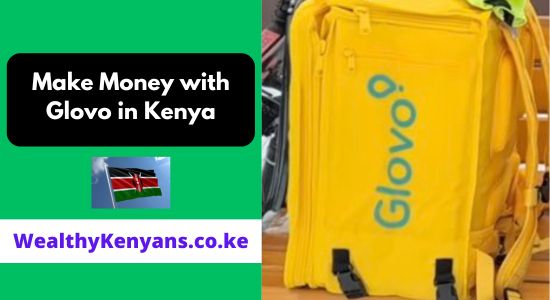
- Receive your Glovo backpack and start delivering
How Glovo Payments Work in Kenya
Glovo riders earn through multiple components that make up each delivery fee. Understanding this breakdown helps you maximize income by choosing the right orders and working strategic hours.
Earnings Components:
| Component | Description | Typical Amount |
|---|---|---|
| Base Rate | Fixed fee per order (varies by city) | Ksh 50 – 150 |
| Distance | Per kilometer from pickup to dropoff | Ksh 15 – 30/km |
| Waiting Time | After 5 minutes at pickup location | Ksh 5 – 10/minute |
| Weather Promos | Rain, high demand periods | 1.2x – 2x multiplier |
| Quests/Challenges | Complete X deliveries for bonus | Ksh 500 – 2,000 |
| Tips | 100% goes to rider | Ksh 20 – 500+ |
Realistic Monthly Earnings (2026):
| Rider Type | Hours/Week | Gross Earnings | After Expenses (Est.) |
|---|---|---|---|
| Part-time (Bicycle) | 20-25 hrs | Ksh 15,000 – 25,000 | Ksh 12,000 – 20,000 |
| Full-time (Bicycle) | 45-50 hrs | Ksh 25,000 – 35,000 | Ksh 20,000 – 28,000 |
| Full-time (Motorbike) | 50-60 hrs | Ksh 35,000 – 60,000 | Ksh 20,000 – 35,000 |
| Top Performer (Motorbike) | 60+ hrs | Ksh 60,000 – 80,000 | Ksh 35,000 – 50,000 |
Motorbike riders must account for: Fuel (Ksh 8,000-15,000/month), maintenance (Ksh 3,000-5,000), smartphone data (Ksh 1,000-2,000), and bike repayments if financed. Bicycle riders have lower costs but slower delivery times limit order volume.

How to Withdraw Money in Kenya
Glovo pays riders weekly via M-Pesa or bank transfer. The payment system is straightforward, but understanding the billing cycle and cash management is crucial.
Payment Schedule:
- Billing Period: 14 days (Monday 00:00 to Sunday 23:59)
- Payment Day: Weekly (exact day varies by city, typically Wednesday or Thursday)
- Method: M-Pesa or bank account transfer
- Cash Orders: You collect cash from customers; Glovo deducts this from your weekly payment
Cash Order Management:
Some orders require cash handling:
- Cash at pickup only: You pay the vendor; customer pays via app
- Cash at pickup and dropoff: You pay vendor and collect from customer
- Cash at dropoff only: Customer pays you cash for the order
How to Track Earnings:
- Open the Glovo Rider app
- Go to the “Payments” section in the menu
- View earnings organized by week and day
- Click individual deliveries to see detailed breakdowns
- Check for promos, quests, and tips separately
Ways to Maximize Glovo Earnings
Highest order volumes occur during lunch (12 PM – 2 PM) and dinner (6 PM – 9 PM) rush. Weekend evenings and rainy days see surge pricing with 1.5x to 2x multipliers.
Best Times to Work:
- Weekday lunch rush: 12:00 – 14:00
- Weekday dinner: 18:00 – 21:00
- Weekend all day: Saturday and Sunday
- Rainy weather: Any time (surge pricing active)
- Holidays and events: Higher demand, fewer riders
Glovo regularly offers “Quests” where you earn bonuses for completing a set number of deliveries within a timeframe. These can add Ksh 500 to Ksh 2,000 extra per day.
Common Quest Examples:
- Complete 10 deliveries = Ksh 500 bonus
- Complete 20 deliveries = Ksh 1,500 bonus
- Work 5 consecutive days = Ksh 2,000 bonus
- Refer a friend who completes 20 orders = Ksh 1,000
Rain and extreme weather trigger “Special Promos” with higher multipliers. Many riders stay home, meaning less competition and more orders for those willing to work.
Weather Strategy:
- Invest in quality rain gear (jacket, pants, phone cover)
- Check weather apps and plan shifts before storms
- Accept longer distances during surges (pay justifies the trip)
- Drive extra carefully; accidents cancel out surge earnings
Invite friends to join Glovo using your personal referral link found in the “Refer a friend” section of the app menu. You earn when they complete the required number of deliveries.
How It Works:
- Share your unique referral link via WhatsApp, SMS, or social media
- Friend signs up and completes required deliveries (usually 20-30)
- You receive Ksh 1,000 to Ksh 2,000 per successful referral
- Track referral progress in the app
Your vehicle choice significantly impacts earnings. Motorbikes offer speed and higher order volume but come with fuel costs. Bicycles have lower costs but limit you to shorter distances and fewer orders per hour.
Vehicle Comparison:
| Vehicle | Pros | Cons | Best For |
|---|---|---|---|
| Bicycle | Zero fuel cost, low maintenance | Slow, limited range, fewer orders | CBD, short distances, part-time |
| Motorbike | Fast, long range, more orders | Fuel costs, maintenance, insurance | Full-time, all areas, max earnings |
| Car | Can deliver large orders, any weather | Fuel costs, parking, traffic | Grocery delivery, catering orders |

Pros and Cons
Pros
- Flexible schedule: work when you want, no boss
- Weekly payments via M-Pesa (reliable and fast)
- Available in 25+ Kenyan cities
- Insurance coverage for accidents while working
- ImaliPay partnership offers fuel and phone financing
- Glovo+ loyalty program with rewards
- Free equipment (backpack) provided
- Surge pricing during peak hours and bad weather
- Tips go 100% to rider
- Multiple earning components (distance, waiting time, quests)
Cons
- You pay all expenses: fuel, maintenance, data, repairs
- No guaranteed minimum wage or employment benefits
- Account deactivation risk for low ratings or complaints
- High competition during peak hours
- Traffic congestion in Nairobi reduces hourly earnings
- Safety risks: accidents, theft, hostile customers
- Inconsistent order volume during off-peak hours
- Cash handling risks and complexity
- Vehicle wear and tear not compensated
- Tax obligations (self-employed, must declare income)
Tips to Maximize Earnings
- Multi-app Strategy: Many successful riders work Glovo, Uber Eats, and Bolt Food simultaneously. When one is slow, switch to another. This maximizes active delivery time.
- Know Your Area: Learn which restaurants are slow and which are fast. Avoid restaurants with consistently long wait times (your waiting time pay only starts after 5 minutes).
- Customer Service: Be polite, communicate delays via the app, and double-check orders. Good ratings lead to priority access to orders and keep your account active.
- Track Expenses: Keep a log of fuel, repairs, and data costs. This helps with tax filing and shows your true net income. Many riders think they earn more than they actually do after expenses.
- Stay Safe: Use a phone mount, not handheld. Wear a helmet (required by law and Glovo policy). Park in visible areas. Your safety is worth more than any delivery fee.
- Join Rider Communities: WhatsApp and Telegram groups for Glovo riders share real-time info about surge areas, slow restaurants, and safety alerts. Search “Glovo Riders Kenya” on Facebook.
- Optimize Routes: Use Google Maps to plan efficient routes. The app calculates distance based on shortest path, but you can sometimes find faster routes with less traffic.
- Keep Backup Power: A power bank is essential. A dead phone means no orders, no navigation, and no way to contact support or customers.
(See also: How to Make Money with MOBROG in Kenya)
Frequently Asked Questions
According to salary data and rider reports, Glovo riders in Kenya earn between Ksh 25,000 and Ksh 40,000 per month on average before expenses. Full-time motorbike riders working 50-60 hours can gross Ksh 35,000-60,000, but after fuel (Ksh 8,000-15,000), maintenance (Ksh 3,000-5,000), and other costs, net income is typically Ksh 20,000-35,000. Bicycle riders earn less (Ksh 15,000-25,000) but have minimal expenses. Top performers in busy areas like Nairobi CBD can exceed Ksh 60,000 gross during high-demand periods.
Yes, Glovo pays riders via M-Pesa or bank transfer weekly. During registration, you provide your M-Pesa number or bank account details. Payments are processed every week for the previous week’s deliveries. If you handle cash orders (where customers pay you cash), the cash collected is deducted from your weekly earnings. You can also use the Wallet feature to manage cash balances and make manual cash-outs via M-Pesa Paybill 510800.
To become a Glovo rider in Kenya, you need: (1) Be at least 18 years old with a valid national ID, (2) Own a bicycle, motorbike, or car in good condition, (3) Have a valid driver’s license and insurance (for motorbike/car), (4) Own a smartphone with data, (5) Have a bank account or M-Pesa for payments. You register at couriers.glovoapp.com, upload your documents, and wait 3-7 days for approval. Glovo provides the delivery backpack; you provide other equipment like rain gear and phone holders.
According to market research and rider feedback, Glovo and Uber Eats are comparable, with different strengths. Glovo has wider coverage in Kenya (25+ cities vs Uber Eats’ 7 cities), lower delivery fees for customers (Ksh 150-350 vs Ksh 200-400), and offers more than just food (groceries, packages, “Anything” category). Uber Eats has more restaurant variety in Nairobi and better first-time user discounts. Most successful riders work on multiple apps simultaneously to maximize orders. Bolt Food has lower fees (Ksh 100-250) but fewer restaurants. Try all three and see which works best in your specific area.
Yes, through Glovo’s partnership with ImaliPay, riders can access financial products including: (1) Fuel financing (pay for fuel and repay later), (2) Smartphone financing (buy a phone for the Glovo app), (3) Personal and accident insurance, (4) Savings products, and (5) “Buy Now Pay Later” for equipment like spare parts. ImaliPay uses your Glovo earnings history to determine credit risk. Access these services through the ImaliPay platform. Additionally, some fleet partners provide motorbikes on hire-purchase arrangements for their employed riders.
(See also: How to Make Money with Branch App in Kenya)
Final Verdict: Is Glovo Worth It in Kenya?
Yes, Glovo is worth it if you approach it as a flexible side hustle, not a guaranteed salary.
For Kenyans with a motorbike or bicycle, a smartphone, and the willingness to work 40-50 hours per week, Glovo offers a legitimate way to earn Ksh 20,000-35,000 net income monthly. The flexibility is the main advantage: you can work around school, another job, or family commitments. The weekly M-Pesa payments are reliable, and the ImaliPay partnership provides financial services previously unavailable to gig workers.
However, the costs are real. Fuel, maintenance, and vehicle wear significantly reduce gross earnings. The work is physically demanding and carries safety risks. Competition is fierce in popular areas. Success requires strategy: working peak hours, multi-apping with Uber Eats and Bolt Food, and maintaining high customer ratings.
If you have a reliable motorbike, live in a busy area like Nairobi, Mombasa, or Kisumu, and can work evenings and weekends, Glovo is one of the better gig economy options in Kenya for 2026. If you are looking for passive income or guaranteed earnings, look elsewhere.
Your Next Steps
1. Ensure you have a reliable vehicle (motorbike recommended) and smartphone
2. Register at couriers.glovoapp.com and upload required documents
3. Download Uber Eats and Bolt Food apps to multi-app
4. Invest in rain gear and safety equipment
5. Join local rider WhatsApp groups for real-time tips
6. Start with part-time hours to learn the system, then scale up
Remember: Your vehicle is your office. Treat it well, track your true earnings after expenses, and prioritize safety over speed. The riders who last are those who work smart, not just hard.
(See also: How to Make Money with Upwork in Kenya | How to Make Money with Fiverr in Kenya)
Sources
- Glovo Rider Hub – Getting Started in Kenya
- Glovo Rider Hub – Earnings & Payments
- Glovo Kenya – Become a Rider
- Bizna Kenya – Requirements to Register as Glovo Rider & Salary
- Fairwork – Kenya Gig Work Platform Ratings 2023
- Competition Authority of Kenya – Online Food & Groceries Delivery Market Study
- Toaster Ding – Glovo vs Uber Eats Comparison
- TechCabal – Food Delivery Startups & Rider Pay 2024
- PayScale – Glovo Salaries in Kenya
- Glassdoor – Glovo Nairobi Salaries
Hi want to join grovo as a driver